


Is Lindsay Clancy really the poster child mothers want?
A TikTok trend has turned a triple murder case into maternal content, raising a question about advocacy, grief and loss.

Over the weekend, a mistrial was declared in the case of Lindsay Clancy, the Massachusetts mother charged with murdering her three children.
For those unfamiliar with it, something that seems almost impossible given social media's obsession with the trial, Clancy strangled five-year-old Cora, three-year-old Dawson and eight-month-old Callan in January 2023, before attempting to take her own life.
That she killed them was not in dispute. The jury had to decide whether she was criminally responsible.
Her defence argued she was suffering from postpartum psychosis. Prosecutors argued she knew exactly what she was doing. After nearly six weeks of testimony and seven days of deliberations, the jury could not agree.
The trial forced a long-overdue conversation about postpartum mental health.
Jurors heard Clancy had been prescribed 13 psychiatric medications and issued more than 30 prescriptions in five months. They heard about suicidal thoughts, hospitalisation and repeated attempts to get help.
These are questions worth asking. Serious ones.


The leading media trade publication in Australia.
Get our top stories straight to your inbox daily by signing up to our Newsletter
By providing your information, you agree to our Terms of Use and our Privacy Policy. We use vendors that may also process your information to help provide our services.
A trial becomes entertainment
The trial contained all the ingredients of a made-for-TV movie, complete with a cavalcade of characters seemingly plucked from central casting.
Clancy's defence attorney, Kevin Reddington, was transformed online into "Big Redd" and "Shreddington" for his ruthless cross-examinations. While prosecutor Jennifer Sprague became the target of vitriol for doing what prosecutors are required to do: prosecute.
Curious, really, how quickly some corners of the internet's support for women evaporates when the woman is the wrong woman.
But something more troubling has happened.
‘Same, Lindsay’
Mothers have begun filming themselves holding their babies while crying to camera, overlaying their videos with passages from Clancy's writings.
Some simply say: "Same, Lindsay."
Same.
There is something profoundly unsettling about that word.
Postpartum depression is real. Postpartum psychosis is real. Women must be able to speak about frightening thoughts, despair and the uglier realities of motherhood without being shamed into silence.
But Clancy killed her children.
Those two facts can exist together.
Indeed, they must.
As Sprague told the jury in closing, contemplating a mother choosing to kill her children makes us feel neither "safe nor comfortable in this world".
Of course it doesn't.
They’re using Lindsay Clancy’s diary words read in court to make videos with their babies and they are fake crying. pic.twitter.com/wy4d0IZo7w
— Luka (@LukaLev) August 18, 2026
A mother's love
A mother is a child's first country. Before the world, before language, before memory, there is her.
Perhaps that is why cases like this disturb something so primitive in us. They invert what we understand motherhood to be.
And perhaps that is also why women see something of themselves in Clancy's writings. But listen, recognising those feelings is one thing; turning them into TikTok content while holding your child is another.
In one video circulating online, a mother sits outside with a baby straddling her leg. The child is barely over eight months old. Its head bobs in quick bounces because its neck muscles are underdeveloped. She holds a red plastic cup in one hand, the kind seen in American college films, and repeatedly tosses water over the child's head.
Toss. Toss. Toss.
The baby flinches.
Its little arms reach outward, searching for balance. Gravity is, after all, still a very new experience.
The mother smiles.
There is something almost unbearable about watching a child who cannot possibly understand the story it has been recruited to tell.
The children at the centre of this
And somewhere in all of this, Cora, Dawson and Callan have been pushed to the edges of their own story.
They were not symbols of a broken healthcare system, nor were they there to help make a broader point about maternal mental health. They were five, three and eight months old.
Whatever we come to understand about their mother and what happened inside that house, we cannot allow the conversation around her to swallow the three children who died there.
None of us sat on that jury. Watching 800 TikToks cannot replicate 21 days of testimony from more than 70 witnesses. Compassion for Clancy does not require declaring her innocent; nor does believing she should be held responsible require denying the existence or horror of postpartum psychosis.
We should be capable of holding more than one truth at once.
And women deserve a serious conversation about postpartum mental illness.
But this isn't it.
Filming yourself crying into your baby's hair for strangers, borrowing the words of a woman who killed hers, risks reducing an extraordinarily serious psychiatric illness to an aesthetic of distressed motherhood.
Worse, those babies will grow up.
The internet won't forget what their mothers posted. Perhaps one day they will understand why they were held in front of a camera beneath the words "Same, Lindsay".
Perhaps they won't.
Before pressing upload, however, there is another question worth asking.
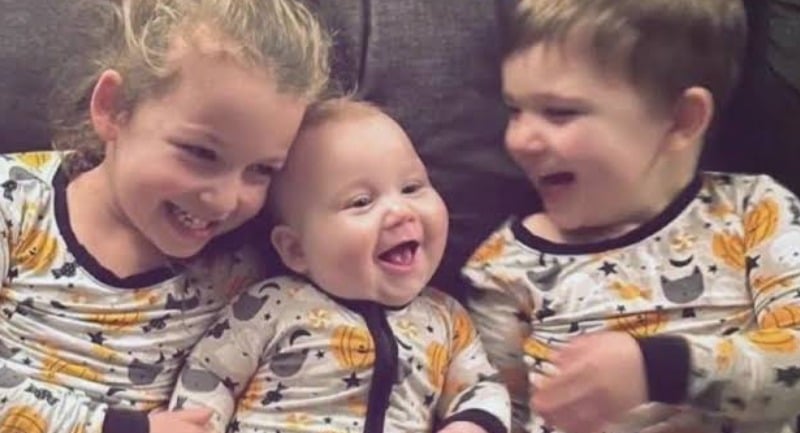
If Clancy becomes the face of this movement, then what happens to the faces of Cora, Dawson and Callan?
More from Mediaweek
The leading media trade publication in Australia.
Get our top stories straight to your inbox daily by signing up to our Newsletter
By providing your information, you agree to our Terms of Use and our Privacy Policy. We use vendors that may also process your information to help provide our services.


.jpg%3Fv%3D1786665475914&w=3840&q=75)
