


Give me a break: Sydney Sweeney isn’t taking women backwards, she’s cashing in
The actor is not setting back women in sport. She's playing the commercial game, attracting attention and owning equity.

In the immortal words of the American rock band OK Go: Here We Go Again.
Apparently, Sydney Sweeney has taken women back to the 1970s.
An impressive feat for a 28-year-old actor armed with several strategically positioned footballs and an equity stake in a sports prediction company.
Sweeney’s new campaign for Novig has been condemned by female athletes who say it sexualises women in sport, diminishes their work and reinforces the idea that women must be attractive before they can be taken seriously.
Look, I get it and absolutely understand and sympathise with their frustration; it is real. Women in sport have spent decades demanding coverage that recognises their strength, talent and records rather than reducing them to bodies in uniforms.
But here's the rub: Sweeney is not a female athlete.
She is an actor appearing in an advertisement for a company in which she has a financial interest. The campaign borrows the furniture of sport, but Sweeney is selling Novig and Sydney Sweeney, because that is quite literally her job.


The leading media trade publication in Australia.
Get our top stories straight to your inbox daily by signing up to our Newsletter
By providing your information, you agree to our Terms of Use and our Privacy Policy. We use vendors that may also process your information to help provide our services.
We may not like the game. But she knows exactly how to play it.
This is what a woman in business looks like
Athletes have responded to the campaign with footage of bruises, muscles, medals, training sessions and the gruelling physical realities behind elite competition.
The message is clear: this is what women in sport actually look like.
They are right. That is what female athletes look like, and Sweeney is not claiming otherwise. She is not presenting herself as an Olympian, discussing her personal best or demanding selection for the 200-metre freestyle. She is an entertainer in an advertisement that uses sport as a visual gag.
Asking Sweeney to embody the blood, sweat, periods, injuries and sacrifice of professional athletes makes about as much sense as asking George Clooney to demonstrate the daily exhaustion of a barista before selling another coffee machine.
It also sets up an unnecessary contest between women. On one side, the disciplined athlete whose body has been built through work. On the other, the beautiful actor whose body has supposedly been deployed without merit.
But both women are working. They are simply working in different industries.
The athlete turns physical performance into medals, sponsorships and commercial value. Sweeney turns fame, performance and public fascination into the same. One does not invalidate the other.
This may not be what a woman in sport looks like. It is what a woman in business looks like.
Deal with it.
She isn’t the victim here
A reflex surfaces whenever an attractive woman uses her appearance commercially. We decide she has been exploited, duped or bent into position by some shadowy boardroom of men.
It is a strangely patronising form of feminism.
Sweeney did not stumble naked onto a basketball hoop after taking a wrong turn at wardrobe. She approached Novig, joined as a strategic partner and equity holder, and helped develop a campaign designed to force an unknown company into the conversation.
It worked.
She is not simply being paid to hold a tennis racquet while somebody else collects the spoils. If the business grows, her investment may grow with it. She has converted the attention economy into an ownership opportunity.
Is she playing the game of patriarchy? Absolutely.
But women have always had to play that game. The difference is that Sweeney appears to have negotiated for a stake in the casino.
The male gaze exists. It shapes advertising, entertainment and the value assigned to certain kinds of beauty. But identifying the system does not automatically strip every woman operating within it of agency.
Sometimes a woman can understand exactly what men want to see, charge them for looking and take a share of the company.
That is not smashing the patriarchy. It is closer to sending it an invoice.
The Dolly Parton problem
Something darker also lies beneath the impulse to tell a beautiful woman how she should present herself.
Case in point: Barbara Walters.
On her podcast The Nerve, Maureen Callahan described Walters as both an important cultural figure who paved the way for women and a deeply unhappy person whose interviews could carry what she called a “dark energy”.
Walters’ questions, Callahan argued, reflected her own discomfort with appearance, packaged and broadcast to millions as perfectly ordinary conversation.
You can see it in her interview with Bette Midler. Sitting in Midler’s home, Walters asked what she thought of the way she looked. When Midler replied that she thought she looked great, Walters shot back: “No kidding.”
Midler tried to turn it into a joke. Walters kept going: “You think you’re sexy?”
Elizabeth Taylor received similar treatment. While a guest in Taylor’s home, Walters told her she “ought to eat a few more vegetables for breakfast”.
The nerve, indeed.
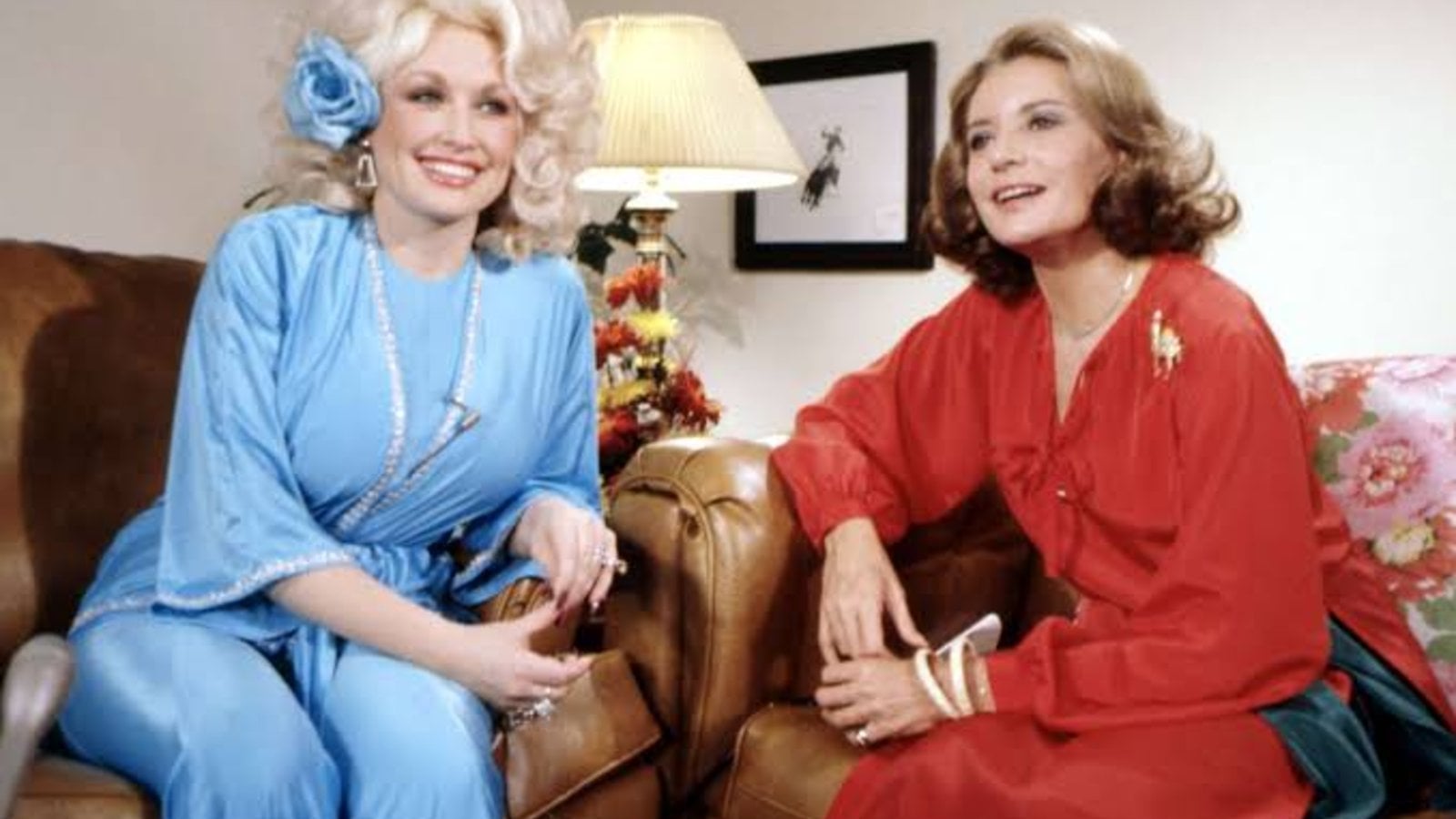
Then there was Dolly Parton.
In 1977, Walters told Parton she didn't need all of it: the enormous blonde hair, heavy makeup, clothes, and exaggerated presentation.
Walters seemed to believe she was stripping away the artifice to locate the serious woman underneath. But the artifice was Parton’s creation.
Dolly understood that people underestimated women who looked like her. She also understood that underestimation could be useful. While others stared at the wig and wondered whether she understood the joke, Parton wrote the songs, built businesses, and protected her publishing rights.
The blonde hair was never proof that she lacked intelligence. It was proof that everybody else could be distracted by blonde hair.
Seen together, these interviews reveal something more uncomfortable than concern. Walters did not simply challenge women who conformed to conventional beauty standards. She also interrogated Midler about not being a conventional beauty, Taylor about her weight and Parton about making herself conspicuous.
No one had a correct way to inhabit a female body. Too glamorous, too large, too unusual, too confident. The rules changed, but the judgement remained.
That is why some of the criticism aimed at Sweeney feels less like liberation and more like the same old surveillance with better branding.
Once again, a successful woman’s appearance is being treated as evidence against her intelligence. Once again, other people are insisting they know what is good for her. And once again, the instruction arrives disguised as concern: you are beautiful, talented and capable, so why would you do this?
Because she chose to.
We keep making the same mistake with Sweeney. We treat her body as something that happens to her, rather than something she understands has commercial power. We insist that a woman can be beautiful and intelligent, then become deeply suspicious when she demonstrates that intelligence by monetising the beauty.
Sweeney has not confused nudity with liberation. She has recognised that the world is already looking and negotiated accordingly.
Perhaps the real discomfort is not that she is being exploited. It is that she knows the bargain, has accepted its contradictions and intends to profit from it.
That may not be feminist revolution. But it is not female surrender either.
Equality cannot come with separate rules
Male athletes have been selling sex for decades. David Beckham built an underwear empire with one foot. Cristiano Ronaldo built a global brand around football and the knowledge that millions enjoy looking at Cristiano Ronaldo.
Nobody suggested they had set men’s sport back 50 years.
Sweeney is not even an athlete. She has no duty to represent every woman in sport, just as female athletes have no duty to represent her.
We cannot call one naked body empowering because it belongs to an Olympian, then declare another degrading because it belongs to an actor. That still leaves women’s bodies being judged for ideological correctness.
Women cannot be progressive and equal only when their choices are approved by the sisterhood. Equality must include the freedom to be serious, silly, covered, naked, athletic, commercial or some untidy combination of them all.
Otherwise, we have not dismantled the rules governing women’s bodies. We have merely changed the people writing them.
More from Mediaweek
The leading media trade publication in Australia.
Get our top stories straight to your inbox daily by signing up to our Newsletter
By providing your information, you agree to our Terms of Use and our Privacy Policy. We use vendors that may also process your information to help provide our services.


