


Inside furniture brand Eva's 24-hour turnaround from Pauline's Press Club speech to moving billboard
Co-founder Amanda Niu went from a Press Club speech to a truck on Melbourne's streets in 24 hours, with no brief at all.

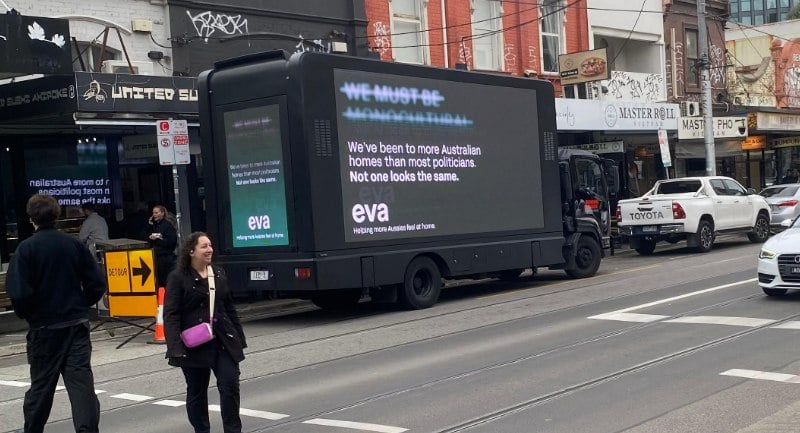
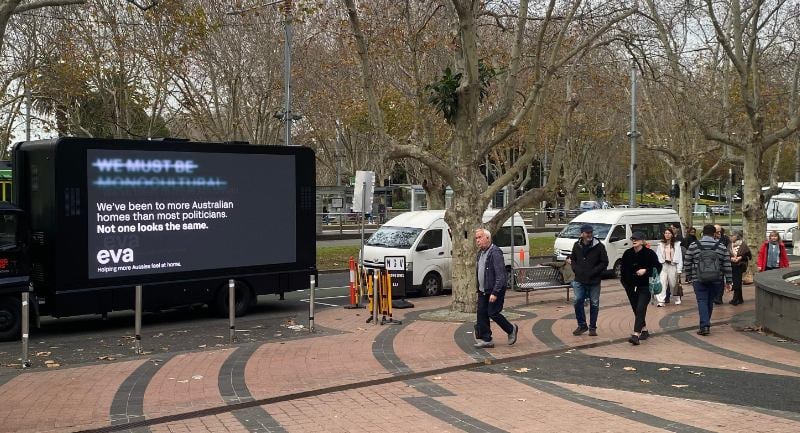
Amanda Niu finalised the copy on a Tuesday. The artwork landed at 11am on Wednesday. By midday, it was moving through Melbourne on the back of a truck.
The line on the mobile digital billboard reads: "We've been to more Australian homes than most politicians. Not one looks the same."
The Australian furniture brand Eva put the creative into market this week in response to Pauline Hanson's recent political commentary about Australia becoming "monocultural", with the same execution rolling out in Sydney to catch the return-to-office crowd.
There was no agency brief, no test-and-learn, no snap Zoom meetings and certainly no six-week approvals process. There was a speech, a nerve, some generational trauma and a company founded on the idea of helping more people feel at home.
The speech behind it
The speech was the One Nation Leader's address to the National Press Club in Canberra on 17 June 2026.


The leading media trade publication in Australia.
Get our top stories straight to your inbox daily by signing up to our Newsletter
By providing your information, you agree to our Terms of Use and our Privacy Policy. We use vendors that may also process your information to help provide our services.
Hanson used it to argue that Australia could not be a multicultural society. She told the club that Australia was multiracial but "must be monocultural", and that Australians had to live under a single cultural umbrella. She linked high migration to a loss of national identity and values, and called for migration cuts as a response to the housing crisis.
The nerve it struck
Eva Co-Founder Niu told Mediaweek the address was the trigger.
"After hearing Senator Hanson's address, I felt incredibly uneasy," Niu said. "She holds a position of power and influence, and this kind of in-group out-group thinking could be incredibly dangerous politics, especially in a country built on immigration."
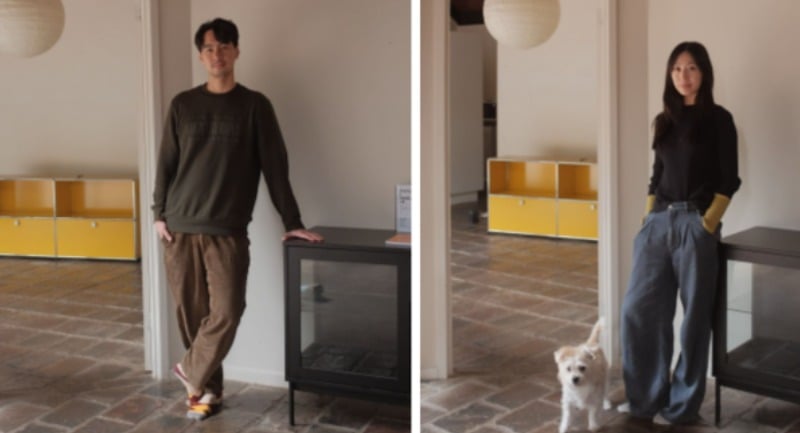
Niu and Co-Founder Ken Lau are both first-generation immigrants. Niu's parents migrated to Australia more than 20 years ago and built a life running a family restaurant.
"It struck a nerve because if that ideology were allowed to persevere, Eva wouldn't be here," she said. "We never would have met, started the business, created jobs, or designed all of the award-winning pieces that over 100,000 people in Australia enjoy today."
"Moreover, our parents speak English as a second language and are ethnically Chinese-Malaysian. At first glance, they didn't sound or look like the 'dominant Australian' culture she seemed to be asking for. It also felt incredibly dismissive of the hardships my parents endured to build a better life for their family here in Australia."
For Niu, the commercial logic and the personal one arrive at the same place. Eva's stated mission is to help more people feel at home.
"Her statements about one cultural identity, whilst sounding like a grand call for unity, also demand that we leave our other cultural identities at the doorstep," Niu said. "This is a very exclusionary way of approaching identity and belonging, which is the complete antithesis to why Eva is here today."
Nobody else put their hand up
What tipped Eva from discomfort to media buy was the silence around it.
"When those comments continued to permeate, I thought, 'Surely I'm not the only one who finds this incredibly uncomfortable and just wrong,'" Niu said. "I was surprised that no other brands were taking a stance, so we decided we should do something about it."
Brand purpose is a well-worn category in Australian marketing, usually arriving fully workshopped and safely apolitical. Eva's version took one day from idea to execution and named the politics directly - a bet that its customers were already having the same conversation.
On the early read, Niu said the response across the brand's social platforms had been "overwhelmingly positive".
"I think because it resonates so closely with our customers. It goes to the heart of belonging and community, something we value, and it respects that home is deeply personal to everyone," she said.
Why now
Niu framed the campaign as a response to a specific economic moment, not just a political one.
"It matters because fear-mongering is the easy path for anyone to take, especially in a country already experiencing significant pain from cost-of-living and housing pressures," she said. "Creating an 'us vs them' narrative doesn't solve anything. It just deepens the divide and promotes disharmony at a time when we should be coming closer and supporting each other."
Asked how she answers the argument at the heart of the debate, Niu did not hedge.
"There's no point arguing who was here first when we all know that none of us was, except the Indigenous peoples of Australia."
Let's be real, that conversation is a lot of ground for a truck to cover. Eva sells sofas, but the billboard is selling something closer to a floor plan of the country - and the argument that it has never had just one.
More from Mediaweek
The leading media trade publication in Australia.
Get our top stories straight to your inbox daily by signing up to our Newsletter
By providing your information, you agree to our Terms of Use and our Privacy Policy. We use vendors that may also process your information to help provide our services.


