


Forbes 30 under 30: One way Forbes has become more culturally relevant than ever
The Forbes 30 Under 30 campaign in 2025 delivered 9.4 million social views, 195,000 likes and 12,000 shares — Forbes Australia's biggest day on the website since its launch.

The Forbes 30 Under 30 campaign in 2025 delivered 9.4 million social views, 195,000 likes and 12,000 shares — Forbes Australia's biggest day on the website since launch.
The mammoth results are something the magazine hopes to surpass this year.
Forbes Australia editor-in-chief Sarah O'Carroll said the campaign, now in its third year locally, has become one of the title's most powerful audience drivers, and is part of a broader growth story that has seen the publication grow readership 26.5% year-on-year, according to the latest Roy Morgan figures — the highest growth of any of Australia's top 25 magazines.
The 30 Under 30 list aims to shine the spotlight on 30 Australian young innovators, trailblazers and entrepreneurs who are reshaping their industries and changing business and society.
Why the Forbes 30 Under 30 campaign works
O'Carroll, who as been in her role since 2022, says she knows why the 30 Under 30 list did so well last year.


The leading media trade publication in Australia.
Get our top stories straight to your inbox daily by signing up to our Newsletter
By providing your information, you agree to our Terms of Use and our Privacy Policy. We use vendors that may also process your information to help provide our services.
"We never built Forbes around demographics," O'Carroll said. "We built it around psychographics. We looked at motivations and what people have in common."
She said a "25-year-old 30 Under 30 finalist and a 65-year-old C-suite billionaire are worlds apart demographically" but "remarkably similar" psychologically — both driven by ambition, curiosity and a desire for impact.
"I think one of the most important things is that people often think of Forbes as the billionaires — the Billionaires List.
"So you’re thinking: how can you attract the 30 Under 30 audience, the younger, up-and-coming audience, without alienating the longstanding billionaires and established grandees, shall we say?
"We looked at motivations and what people have in common.They’re curious. They’re ambitious. They want to succeed. They want to change the world. They want to invest. They want to learn. They want access to interesting people.
"So we built Forbes around success and ambition. How do I succeed? How do I have an impact on the world?
"30 Under 30 highlights the next generation of entrepreneurs, creators, athletes and innovators across eight sectors: finance and venture capital; media and entertainment; music and the arts; retail and e-commerce; science; social impact; sport; and AI and technology.
"This is our third year doing it in Australia. Last year, the day the list launched was our biggest day on the website since we launched. It had 9.4 million social views. It really demonstrates the appetite for these people within the Forbes audience.
O'Carroll recalls Grace Toombs, who was on the cover of Forbes for the campaign last year.
"She is the founder of June Health, a young Indigenous woman who created the first at-home cervical screening test. She was still at a very early stage of her journey with June Health when she appeared on the Forbes cover. We put her on the cover alongside Josh Giddey, Gout Gout, the runner, and Milly Alcock, the actress who is doing incredibly well and is now Supergirl.
"Less than a year later, Grace Toombs did a video about what had happened since she was named to the Forbes 30 Under 30 list. She said that suddenly doors started opening — whether that was around funding, approvals or other opportunities.That really showed us the power of 30 Under 30.
"It also showed us the interest among this younger demographic — people who are clearly into business and incredibly ambitious, but who have told us they would never traditionally pick up an old-school business newspaper.
“For some reason, Forbes sits at this intersection of business while still occupying that cool, aspirational space where they want to be, where they want to tell their story and where brands want to align.”
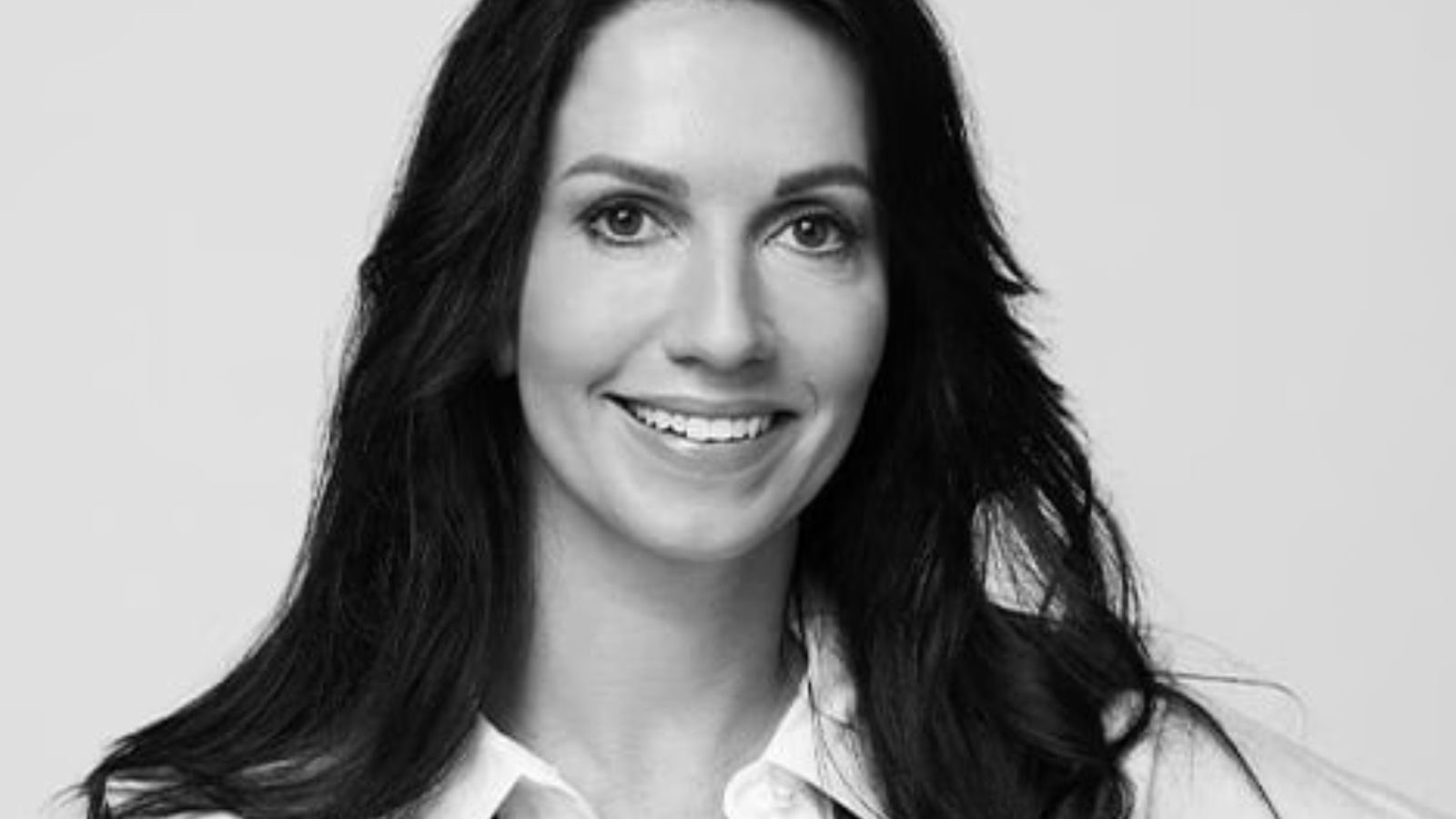
Forbes Australia's Editor in Chief, Sarah O'Carroll
Forbes makes championing diversity a priority
O'Carroll acknowledges the impact of championing a diverse range of people.
"Diversity has been a priority since we launched four years ago — and not just as a tick-box exercise.
"Speaking to Stewart Hawkins, who manages the magazine, and Sam, who manages the website, I’d say diversity is number one on our agenda.
"I don’t want to pick up a publication and see the same types of people throughout it. Traditional media — and business media in particular — has historically been full of older white men.
"But there are so many stories out there about Indigenous people, ethnic minorities and people from different backgrounds who are doing amazing things, and we want to tell those stories. We’ve had people write to me about this.
"When we had Lucy Liu, co-founder of Airwallex, on the cover, I had numerous women of Asian descent message me saying that when they saw somebody like Lucy on the cover, it gave them confidence. Seeing somebody like them in that position helped them believe they could aspire to do that too.
"People don’t always realise how important it is to see somebody who is like you in that place and on that platform to feel that you can achieve it too.
"People have talked about this for years, but the more we do it, the more I realise how important it is. We’re not perfect by any stretch, but people have remarked that you can flick through the magazine and see such a diversity of backgrounds and stories.
"These are generally positive stories about people who have gone through the hard yards and pushed through barriers and obstacles to get where they are.
“It makes people feel good, and I think that’s probably one of the reasons for the growth of the magazine.”
O'Carroll noted alumni of the list, including Dropbox's Drew Houston, Instagram's Kevin Systrom, Pinterest's Ben Silbermann and Meta's Mark Zuckerberg, alongside local names from Canva and Afterpay, as proof of the list's track record for spotting founders early.
She cited robotics founder Grace Brown and June Health founder Grace Toombs as recent examples of finalists who have spoken about how Forbes recognition opened doors around funding and opportunities almost immediately.
Advice for women 50+ in media
Asked what advice she had for women in media who wouldn't fit in the 30 Under 30 cmpaign — women further along in their careers navigating an industry increasingly reshaped by AI — O'Carroll pointed to a potentially forthcoming Forbes franchise: 50 Over 50, already running in the US and hopefully happening soon for Australia.
O'Carroll said the pressure many older women in media feel to keep pace with AI is not as necessary as they may think.
"You can get your head in an absolute tizzy trying to keep up with every latest iteration of every AI platform," O'Carroll said. "But for us — and I think for journalists — it goes back to what is most valuable and what is scarce."
That scarcity, she said, is original reporting, verification and editorial standards — the qualities AI cannot replicate.
"As AI becomes more prevalent, I try to focus on the things that haven't changed: human behaviour," O'Carroll said.
"Technology is happening and it can mess with your brain completely. Instead, I think about human behaviour: What do humans still want?That’s really the bedrock of our strategy.
"People want recognition, they want status, they want to learn, they want to make money, they want access to the people who have already done it. Those things haven't disappeared because of ChatGPT."
The editor added, "It is something I hear more and more. We had Bruna Papandrea and Asher Keddie on stage at the Forbes Women Summit.
"They’re both in their early 50s, and they spoke about how it took until now for them to really come into their own and not worry about certain things.They also understand the challenges, especially in acting. It used to be said that once you were over 40, you wouldn’t get cast in roles.
“But slowly, this over-50 women’s franchise is becoming more valuable and recognised. Meryl Streep has spoken about it. She did the first The Devil Wears Prada when she was 56, and she did the second one 20 years later. I think it’s increasingly being recognised as a valuable audience and franchise.”
O'Carroll also mentioned a recent Forbes creator shoot subject, Kylie Jones, as an example of the potential beyond 50. Jones was told at 50 she "didn't understand social media" or AI while job-hunting after a corporate career, before launching 50 and Fearless and reaching around a million followers within eight months.
Forbes' extraordinary growth
Forbes Australia now averages 386,000 readers per issue and 479,000 in average monthly cross-platform readership, up 8% year-on-year, placing it second only to Qantas in the business, financial and airline magazine category.
More from Mediaweek
The leading media trade publication in Australia.
Get our top stories straight to your inbox daily by signing up to our Newsletter
By providing your information, you agree to our Terms of Use and our Privacy Policy. We use vendors that may also process your information to help provide our services.


