


EXCLUSIVE: Christian O'Connell reveals the secret behind every great conversation
Christian O'Connell shares why authentic conversations matter more than ever in this exclusive extract from Unscript.

For almost three decades, Christian O'Connell has made a career out of finding connection in the unscripted moments. Now, the broadcaster is turning those lessons into a book.
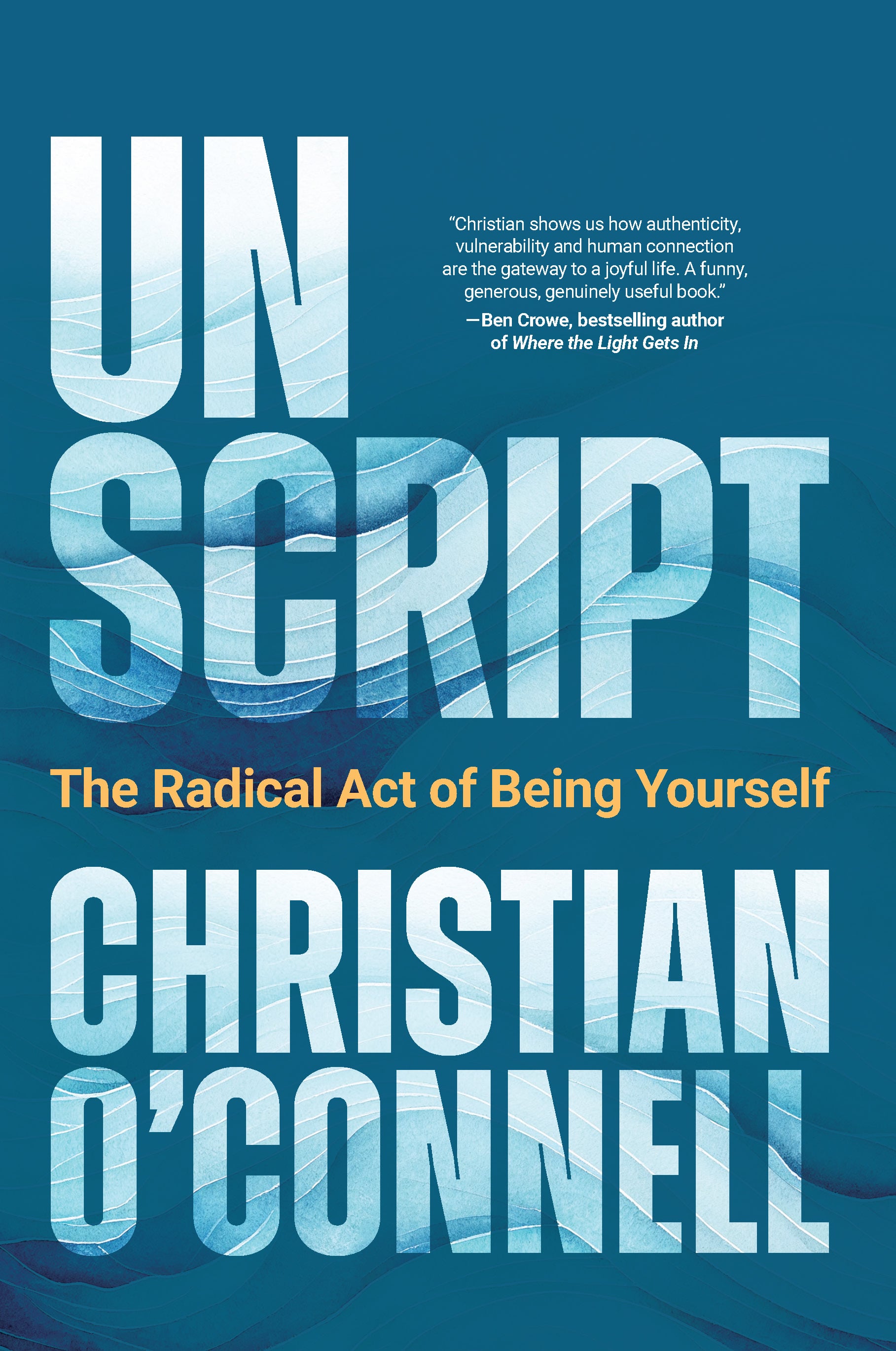
Ahead of its release on 29 July, Mediaweek has obtained an exclusive extract from Unscript: The Radical Act of Being Yourself, in which O'Connell reflects on authenticity, vulnerability and why genuine human connection matters more than ever in an era of curated online lives and AI-generated content.
Read the exclusive excerpt below.
One thing I’m known for in radio is how I can connect very quickly and deeply with my callers. This comes not from technique, or something to apply or do. It comes from opening my heart, presence and this compass: WAVES.
It was the ocean that changed how I think about conversation. My wife swam in the ocean daily. I preferred to sit on the beach and just be in awe of the waves. The rhythm resting me.
I started to understand something about the dynamic nature of waves. How they’re never the same twice. How they’re both powerful and vulnerable, rising and falling, always in motion.
And I realised: conversations are like waves. All those years looking at soundwaves editing audio, the rise and falls, the falls and rise. It all felt connected.


The leading media trade publication in Australia.
Get our top stories straight to your inbox daily by signing up to our Newsletter
By providing your information, you agree to our Terms of Use and our Privacy Policy. We use vendors that may also process your information to help provide our services.
What a wave actually is
I thought a wave was just what you see: that beautiful curl crashing on the beach. Done. Simple. But that’s not what a wave is at all.
A wave is a circular pattern of energy moving through water. If you slice a wave in half, the top part you see – that elegant curve – that’s only half the story.
Most of the wave – the shape-maker, the force, the truth – is happening under the surface. Beneath what we can see. Circular patterns of energy, moving through the water, shaped by the ocean floor beneath it. Shaped by what it meets.
Standing there watching wave after wave – no two the same, each one shaped by invisible forces – I realised: that’s exactly what a conversation is.
We’re never just listening to words
When two people talk, it’s not just two brains sending data through the air like Bluetooth speakers. It’s two bodies of water feeling each other’s energy.
Swells. Pauses. Shifts. Eddies. Currents.
The words we say – the mood we’re in, the tone we use – are just the surface. The curl. What you can see.
But underneath? That’s where all the real stuff lives. Scripts we inherited. Stories we tell ourselves. Emotions we’re pretending we’re not having. Fear we won’t name. History we’re dragging behind us. The ache. The hope. The truth we’re dancing around.
We’re never just listening to words – we’re listening to the shape of what’s underneath the words.
When someone is defensive, you’re seeing the surface. But beneath? Maybe they hit some old script or story that’s frozen somewhere in them. This changes the shape of the energy moving through them, and that’s why the soundwave is breaking rough.
When someone’s energy goes flat, something underneath has shifted. When the conversation suddenly catches fire, something deep has aligned. A surge of energy is moving through them and into you.
Stories are waves too
There’s fascinating research out of Princeton. Scientists recorded the brain activity of two people – one telling a story, one listening. What they found is that as the story unfolds, the listener’s brainwaves start to synchronise with the storyteller's. Not metaphorically. Literally. Their brain patterns mirror each other. The better the listener comprehends the story, the more closely the waves match.
The story isn’t just heard. It’s felt. It moves through the body. It creates resonance.
This is why oral storytelling is so different from reading. When you read, you’re alone with the text – the visual experience is analytic and individual. But when you hear a story? When someone’s voice enters your ears and reverberates in your skull?
You’re not observing from a distance. You’re in it. You are participating in it.
Scripts prevent synchronisation. When you’re in your head – following the formula, worrying about what to say next – your brainwaves are doing their own thing. The other person’s nervous system knows. Mirror neurons detect it. The wave crashes.
Connect vs disconnect
There are two ways to approach a conversation:
• The scripted way: "How much can I do to this conversation? How can I control, manage, manipulate? How can I steer it where I want, to get what I need out of it?"
• The WAVES way: "How can I participate with what’s emerging? How can I stay open instead of rushing to judgement? How can I be here instead of in my head?"
Think about it: a way to be with the ocean, riding a river – listening deeply to it and riding with its natural ebbs and flows. You might paddle every once in a while, but mostly it’s a dance with the current, allowing things to unfold naturally. There’s a deep effortlessness that arises from this way of being, and it’s a lot more enjoyable, not to mention effective.
Now read that back and replace the word "ocean" with "conversation". Same thing.
You can’t surf a wave while you’re stiff. You need a limber, flexible core – hips moving, knees bending, body responding to what the wave does. Surfers are in conversation with the ocean.
You can’t connect while rigid – defended, controlling, tight. You need a regulated nervous system, an open body and a flexible response.
Scripts make you stiff. WAVES makes you limber.
In 2023, I did a three-month intensive masterclass with Joe Hudson. He has a framework called VIEW: Vulnerability, Impartiality, Empathy, Wonder. It opened something in me.
But sitting with it afterwards, I needed to create my own version – one that came from my experience, my radio work, my body.
This is where WAVES comes in. It’s not a technique. It’s not a script. It’s a way of being in conversation – a way of being in the ocean of "us" together:
• Wonder. The engine driving it all.
• Attunement. How you tune into yourself affects how you tune into others.
• Vulnerability. Share what’s in your heart. Even when it’s uncomfortable.
• Enjoyment. Your state is your contribution to every conversation.
• Surf. Play. Remember how?
WAVES is what I use during every single radio show. It’s a compass I created because the map and territory, like the ocean, change every day. When I lose sight of the horizon, or the shore, it navigates me back to where I want to be – in my heart.
Edited extract from Unscript: The Radical Act of Being Yourself by Christian O’Connell (Wiley, $34.95), available 29 July at all leading retailers.
More from Mediaweek
The leading media trade publication in Australia.
Get our top stories straight to your inbox daily by signing up to our Newsletter
By providing your information, you agree to our Terms of Use and our Privacy Policy. We use vendors that may also process your information to help provide our services.


