


New study finds AI fiction is easy to detect as it's both crap and boring
Every LLM also comes with its own literary tics.

"It was the best of times, it was the blurst of times".
While The Simpsons' Montgomery Burns' theory that a thousand monkeys working at a thousand typewriters to write 'the greatest novel known to man' may have seemed like a rather bad idea at the time ... hoo boy, dear reader, have we got news for you.
For a while, spotting AI-written fiction felt like a parlour game: count the em-dashes or watch for groupings of three. But as it turns out, none of us really need to think that hard. And while, yes, thinking hard is something many in the culture have indeed not done in a while, it seems that even the most basic discerning eye may work against AI detection.
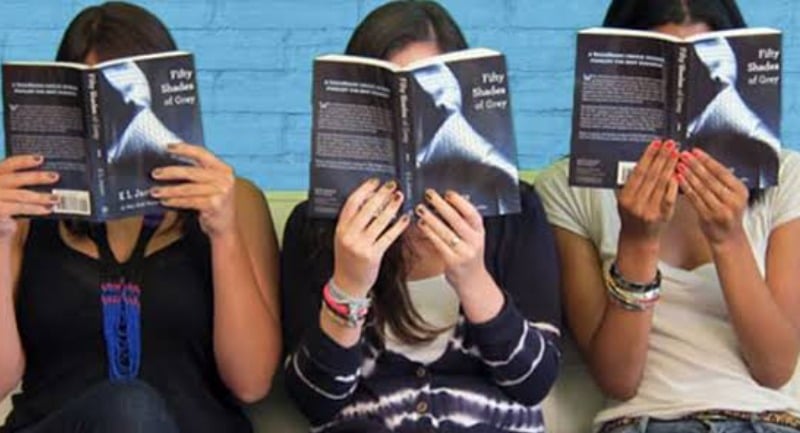
You see, according to a new preprint out of the University of Maryland, College Park and Google DeepMind, it's pretty easy to spot AI in fiction novels because it's a) shit and b) boring. That said, the knowledge does bring into question the validity of the authorship of one Colleen Hoover and E.L. James.
The study, reported by 404 Media, ran more than 50,000 AI-generated short stories through a detection tool called StoryScope, and then set them against 10,272 human-written stories pulled from the Books3 dataset - the same trove of pirated ebooks currently keeping copyright lawyers gainfully employed, featuring work from Joyce Carol Oates, Stephen King, Louis L'Amour, Charlotte Perkins Gilman and Harlan Ellison.


The leading media trade publication in Australia.
Get our top stories straight to your inbox daily by signing up to our Newsletter
By providing your information, you agree to our Terms of Use and our Privacy Policy. We use vendors that may also process your information to help provide our services.
The pattern that emerged was obvious.
AI narrators explain their own theme outright 77% of the time, versus 52% for human writers.
Give an AI character a philosophical disagreement, and there's a 59% chance it turns into a staged, articulated debate, compared with 34% for humans. Fear, too, comes pre-packaged: "tightening chest, cold sweat, and dimming lamplight," the study notes, where a human writer might simply say the character was scared.
Each model even has its own tic.
Claude flattens the escalation of events. GPT can't resist a dream sequence. Gemini reaches for external description of a character before it bothers with anything internal.
"AI stories over-explain themes and favour tidy, single-track plots while human stories frame protagonists' choices as more morally ambiguous and have increased temporal complexity," the study found, according to 404 Media's reporting. "
We find that AI-generated stories cluster in a shared region of narrative space, while human-authored stories exhibit greater diversity." Jenna Russell, one of the study's authors and a University of Maryland researcher who also interns at AI-detection company Pangram, told the publication, adding that the project was never really about catching cheats mid-sentence.
"The idea for this project came because we are hoping to eventually move past plain text detection, into some sort of space where we can separate human ideas from AI-generated ideas," she said.
StoryScope builds on NarraBench, a 2025 benchmark that first proposed a taxonomy of narrative features, and measures fiction against markers such as plot development, character description, setting, and temporal structure rather than word choice.
"It was my first attempt at getting 'under the surface' and focusing more on ideas," Russell told the publication.
"This method also adds some interpretability to detection, which is an open question in the field. Using narrative features, we can point to certain tangible features - such as the number of subplots included in a story. I think this is why it's struck a chord recently; people can really say 'ah, these are some of the underlying traits of how AI writes fiction.'"
The dataset doing the heavy lifting here isn't without baggage.
Books3 is a collection of some 183,000 books scraped from pirated ebooks and is the subject of multiple lawsuits. It has already trained an unknown number of large language models without a cent going to the authors whose short stories were fed through it twice: once to train the models being tested, and again to test whether those models could be told apart from the originals.
Russell told 404 Media the dataset was "controversial," adding: "Hence why we do not release it to the public." The study itself includes a formal disclosure acknowledging copyright issues and stating that the dataset's use was "restricted to academic purposes only."
That tension isn't hypothetical for Australian publishing either, as it's currently sitting on the Productivity Commission's desk.
The Commission is weighing a proposal to carve out a "text and data mining" exception in the Copyright Act, which would allow AI companies to scrape books, research, and other published works at scale to train their models without permission or payment.
The Australian Publishers Association isn't having it.
Backed by the Australian Society of Authors and a growing coalition of cultural organisations, the APA argues that the exception would allow AI companies to use the work of Australian authors and publishers for free, while undercutting the government's own National Cultural Policy commitments to creators' livelihoods.
The Productivity Commission is still taking submissions before it finalises its recommendations, and the APA has confirmed it will lodge a formal response pushing the government to reject any changes that weaken copyright protections.
More from Mediaweek
The leading media trade publication in Australia.
Get our top stories straight to your inbox daily by signing up to our Newsletter
By providing your information, you agree to our Terms of Use and our Privacy Policy. We use vendors that may also process your information to help provide our services.


