


ACCC opens inquiries into Aldi, Coles and Leggo's over tomato origin claims
The watchdog is now moving after lab testing found tomato paste labelled Australian was actually Chinese.

The Australian Competition and Consumer Commission (ACCC) has opened inquiries into Aldi, Coles and Leggo's after a Four Corners investigation found tomato products labelled as Australian- or Italian-grown were actually sourced from China.
ACCC Commissioner Luke Woodward said the regulator was examining the allegations in line with its usual approach to potentially misleading consumer conduct.
"It is important that consumers can be confident that any claims made on food labelling, packaging and in advertisements are truthful, accurate and not misleading," Woodward said.
"We know that consumers may be guided by non-price factors, including claims about the country of origin or supply chain, when choosing which food products to buy."
The Four Corners findings
The inquiries follow a Four Corners report, published by ABC Investigations, revealing forensic testing had found dozens of tomato paste and passata products claiming Australian or Italian origin were actually grown in China.


The leading media trade publication in Australia.
Get our top stories straight to your inbox daily by signing up to our Newsletter
By providing your information, you agree to our Terms of Use and our Privacy Policy. We use vendors that may also process your information to help provide our services.
Forensic laboratory Source Certain tested more than 900 samples across 221 processed tomato products from 39 brands over an eight-month investigation. Twenty-two per cent of products failed country-of-origin testing, with a further 6% flagged for additional testing.
Of the products that failed, 53% were traced to Xinjiang, a region associated with allegations of forced Uyghur labour.
Which brands failed
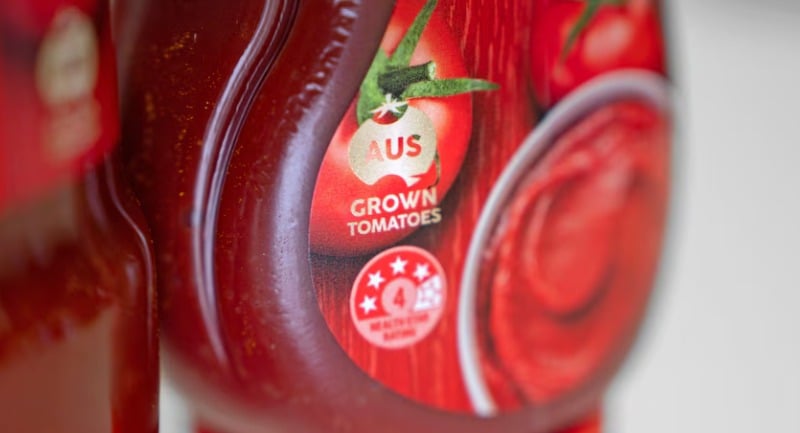
Leggo's, owned by US food giant Simplot, recorded the highest failure rate. Of 33 Leggo's tomato paste products tested, 27 - about 80% - did not match their labelled origin, despite packaging stating "Australian grown". Two-thirds of the failed Leggo's products were linked to Xinjiang.
Coles's home-brand "Italian" tomato paste also failed testing, along with Aldi's Remano home-brand paste. Six of seven failed Coles products were traced to Xinjiang. Imported Rosso Gargano passata, sold through Coles and labelled as Italian, was also found to have a forensic profile consistent with Chinese-grown tomatoes.
Brands that passed testing included Mutti, SPC, Woolworths, Providore D'Italia and Annalisa. Diced tomato and passata products from both Leggo's and Coles also passed.
Company responses
Simplot declined an interview but said in a statement it rejected the test results, citing supply chain documentation, supplier verification and independent audits tracing the products to Australian farms. The company said it had not conducted its own forensic testing.
Coles also rejected the findings and said it would commission independent testing to confirm the provenance of its home-brand tomato paste. Aldi said it partnered with reputable suppliers who had assured the company of the products' stated origin. The importer of Rosso Gargano likewise rejected the findings, citing access to detailed traceability data.
Calls for tougher action
Former ACCC chairman Allan Fels described the findings as "deeply concerning" and called for stronger regulatory action against food fraud.
"If the laboratory tests are true, the ACCC should take punitive action in the courts against Leggo's," Fels said.
More from Mediaweek
The leading media trade publication in Australia.
Get our top stories straight to your inbox daily by signing up to our Newsletter
By providing your information, you agree to our Terms of Use and our Privacy Policy. We use vendors that may also process your information to help provide our services.


